
Personalized Education Plans (PEPs)
Every Student Has a Plan Here. It's Theirs.
Most schools know that kids learn differently. Very few are built to actually do something about it.
At AMPed, every student has a Personalized Education Plan — a living document that captures where they are, where they’re headed, and what the path looks like for them specifically. Not a pacing guide. A real plan, built with your child, reviewed with your family, and actually used.
A Plan That Belongs to Your Child
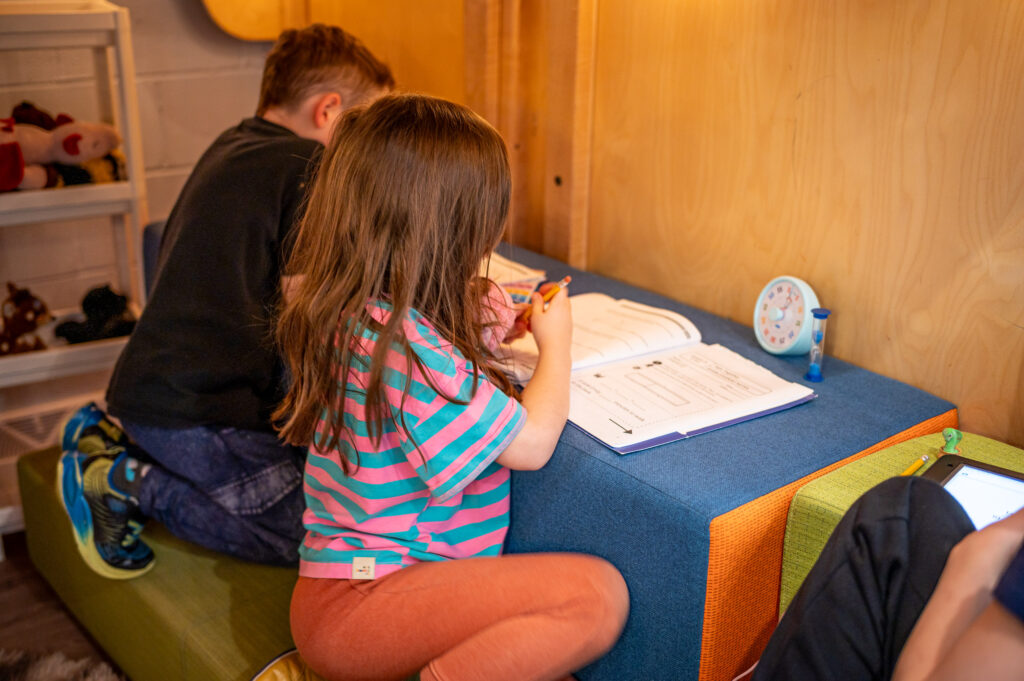
A Personalized Education Plan isn’t something that happens to your child. It’s something they help shape.
Each PEP is built at the beginning of the year through a conversation between your child, their teachers, and your family. It reflects where your student is academically, how they learn best, and what they’re working toward. And because it comes from real knowledge of your child, it gets used.
A PEP includes:
- Academic goals grounded in rigorous, recognized benchmarks and set from your child’s actual starting point — not a grade level average
- Learning strengths and preferences so teachers can design instruction that works with how your child thinks
- Portrait of a Learner goals tied to skills like collaboration, curiosity, and self direction
- Support structures built into daily practice — not added on, just how things work here
- Your child’s voice — what they care about, what’s hard, and where they want to go
PEPs in Practice
Built at the start. Every student begins the year with a planning conversation. Teachers bring what they’ve observed. Students bring their own perspective. Families weigh in on what matters. The plan that comes out of it reflects all three.
Used every day. A PEP isn’t filed away. It shapes how teachers plan instruction, which projects a student takes on, how feedback is framed, and when a student moves forward. With six students per teacher, this isn’t a goal — it’s just how the day runs.
Celebrated twice a year. Students lead a PEP Rally — a presentation where they walk their family through their own growth and set goals for the next stretch. More on that below.
The PEP Rally
Not the bleachers-and-a-mascot kind.
Twice a year, students sit down with their family, open their portfolio, and walk through their year themselves. They share work they’re proud of, name the goals they reached, talk honestly about where they got stuck, and tell you what they’re working toward next. Teachers are there, but this is your child’s presentation.
Most families tell us it’s the first time school felt like it was really about their kid.
“One of the standout aspects of the school is how students are encouraged to take ownership of their learning. They are given the autonomy to explore topics that interest them, which sparks curiosity and fosters a love for learning.”
Why it works:
Parent teacher conferences hand the narrative to the teacher. The parent listens. The student is somewhere else entirely. At AMPed, the student runs the meeting — because they’ve been building toward it all year.
When a student has to stand up and explain their own learning, something shifts. They get better at knowing where they are. They start to own their next steps instead of waiting to be told.
What Families Experience at a PEP Rally
- Your child leads. They’ve prepared. They know what they want to share and how to talk about it.
- Real work, not a printout. Projects, writing, reflections — actual things your child made, showing growth over time.
- An honest conversation. What’s going well, what’s hard, what’s next. No surprises, because families aren’t kept in the dark between rallies.
- Goals they own. The rally ends with your child naming what they’re going after next — and they’re accountable to it at the next one.
Built for Every Learner. Not Just Some.
PEPs aren’t for students who need extra support. Every student at AMPed has one, because every student deserves this level of attention.
AMPed is inclusive by design. The structures that help students thrive — flexible pacing, multiple ways to show what you know, goals built around the individual — are just how we teach. A PEP isn’t a signal that something is wrong. It’s how we make sure learning is actually working.
Questions families ask about PEPs
What is a Personalized Education Plan (PEP) at AMPed Academy?
A Personalized Education Plan, or PEP, is a living document built together with each student, their teachers, and their family. It maps out academic goals, learning preferences, and growth targets for the year. Unlike a generic curriculum, a PEP is built around your specific child — where they are right now, how they learn best, and where they’re headed. It’s revisited regularly and used to guide instruction every day.
How is a PEP different from a traditional parent-teacher conference?
Traditional conferences put the teacher in charge of the narrative and the parent in the audience. At AMPed, students are at the center of the process. They help build their PEP at the start of the year and lead the PEP Rally — a presentation of their own growth — twice a year. Families leave with a real picture of what their child understands, not just a report card summary.
What is a PEP Rally at AMPed Academy?
A PEP Rally is AMPed’s student led learning showcase, held twice a year. Each student presents their own growth to their family, walking through their portfolio, sharing work they’re proud of, naming goals they reached, and setting new ones for the stretch ahead. Teachers participate as coaches and add context, but the presentation belongs to the student. It’s one of the most consistent things families tell us they didn’t expect and didn’t want to miss.
Are Personalized Education Plans only for students with learning differences?
No. Every student at AMPed has a PEP — not because they need intervention, but because every student deserves to be known that specifically. AMPed is inclusive by design, which means the structures that help some students thrive — flexible pacing, multiple ways to demonstrate mastery, individualized goals — are simply how we teach everyone. A PEP is a tool for growth, not a flag for struggle.
How often is a student's PEP updated?
Each PEP is built at the start of the school year and formally reviewed twice a year at the PEP Rally. Between rallies, teachers adjust goals, pacing, and support structures as part of everyday instruction. Because our ratio is six students per teacher, changes don’t wait for a scheduled meeting. They happen as soon as a teacher sees that something needs to shift.
What does a student's PEP actually include?
A PEP at AMPed includes academic goals across core subject areas, learning strengths and preferences, growth targets tied to skills like collaboration and self direction, any support structures built into the student’s daily experience, and the student’s own voice — what they’re excited about, what they find challenging, and where they want to go next. It’s a complete picture of the learner, not just a list of content standards.
How do families stay informed between PEP Rallies?
AMPed maintains ongoing communication with families throughout the year, not just at formal checkpoints. Because teachers know each student closely and classes stay small, progress updates are shared as they happen rather than saved for a scheduled conference. Families are never surprised at a PEP Rally because they’ve been part of the conversation all along.
How does AMPed set academic goals if students aren't placed by grade level?
Academic goals at AMPed are set from each student’s demonstrated starting point, not their age or birth year. We hold students to rigorous, meaningful targets — the kind that actually prepare them for demanding high school programs and beyond. Progress is measured against those individual benchmarks, and advancement happens when mastery is demonstrated, not when the calendar says it should.